



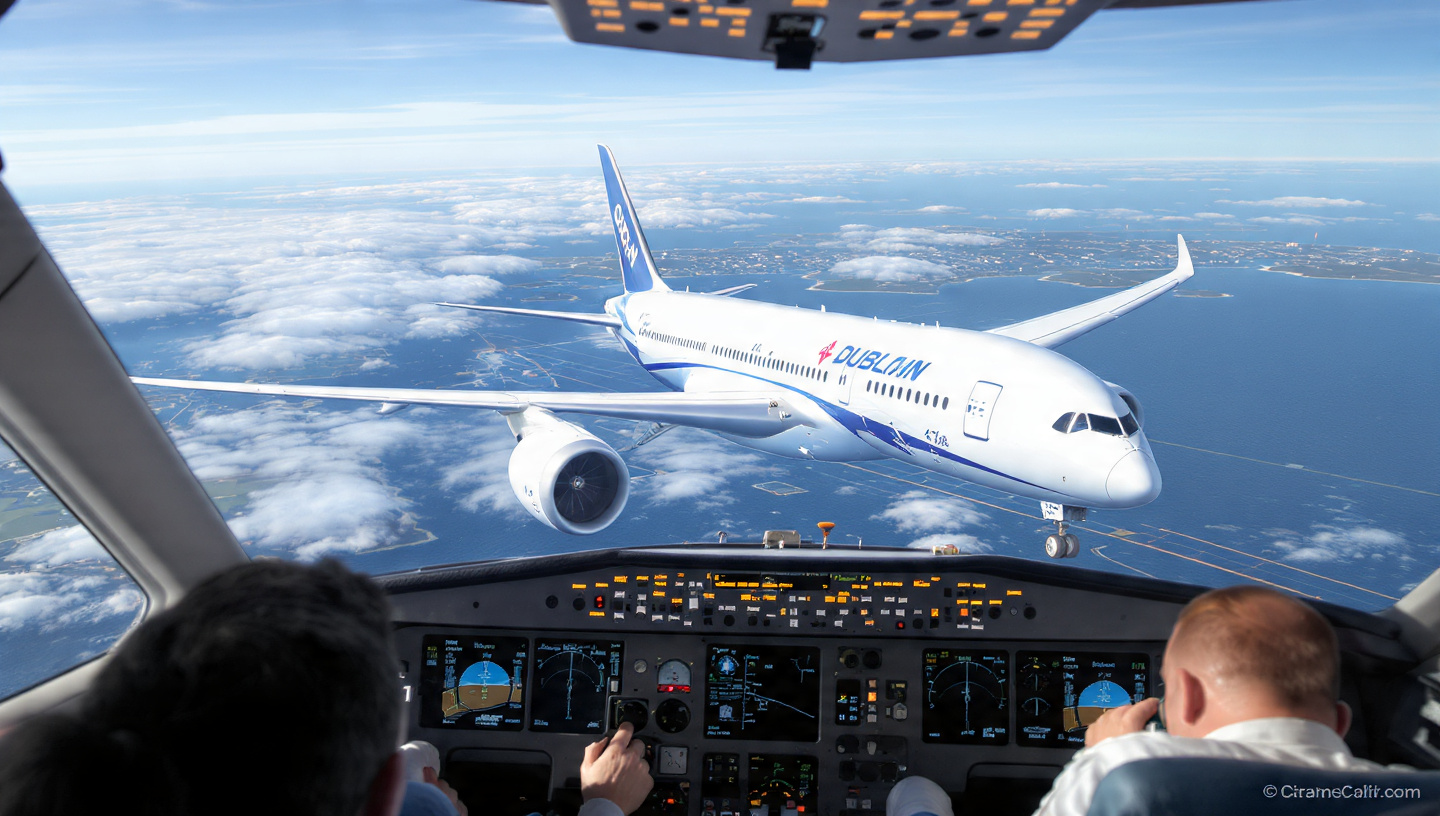
On October 30, 2025, United Airlines Flight UA109 — operating between Munich Airport (MUC) and Washington Dulles International Airport (IAD) — made an unexpected diversion to Dublin Airport (DUB) due to a mid-flight medical incident.
Although diversions are relatively rare, this event highlights the importance of aviation safety protocols and quick decision-making.
Here is a detailed overview of the key figures, facts, and timeline surrounding the UA109 diversion.
Flight Overview
-
Flight Number: UA109
-
Aircraft Type: Boeing 787‑8 Dreamliner
-
Route: Munich (MUC) → Washington D.C. (IAD)
-
Passengers: Over 200 on board
-
Crew: Standard long-haul crew with minimum required attendants
Flight UA109 departed Munich at around 9:00 a.m. local time, cruising at 35,000 feet over the North Atlantic when the incident occurred.
The Incident That Triggered the Diversion
Several hours into the flight, a cabin crew member experienced a medical condition severe enough to prevent them from fulfilling essential safety responsibilities.
Aviation regulations require a minimum number of fit crew members for long-haul flights.
When this requirement is no longer met, pilots must divert to the nearest suitable airport for passenger and crew safety.
-
Medical Condition: Not life-threatening
-
Affected Crew Role: Cabin attendant critical for safety operations
-
Immediate Action: Diversion to nearest certified airport (Dublin)
Why Dublin Airport Was Chosen
Dublin Airport is a common transatlantic diversion point for flights between Europe and North America due to:
-
ETOPS Compliance: The airport is within the maximum diversion range for twin-engine aircraft like the Boeing 787.
-
Facilities: Fully equipped to handle medical emergencies and large aircraft operations.
-
Safety Protocols: Able to quickly accommodate unscheduled landings.
The aircraft landed safely at 3:00 p.m. GMT, where the crew member was evaluated by medical personnel.
Timeline of UA109 Diversion
| Time (Local) | Event |
|---|---|
| 9:00 a.m. | Flight UA109 departs Munich |
| Mid-flight | Medical incident with cabin crew |
| 3:00 p.m. GMT | Flight diverts and lands in Dublin |
| 4:15 p.m. GMT | Flight departs Dublin after medical clearance |
| 6:30 p.m. (local) | Flight arrives at Washington Dulles, approx. 2-hour delay |
This timeline reflects the efficiency of airline emergency response procedures.
Key Figures & Statistics
-
Passengers affected: ~200
-
Delay duration: ~2 hours
-
Crew involved in incident: 1 medical case
-
Distance diverted: Approx. 1,200 km from original route
-
Aircraft type: Boeing 787‑8, capable of transatlantic operations under ETOPS rules
Despite the incident, no injuries were reported, and all safety protocols were strictly followed.
Safety and Regulatory Context
The UA109 diversion demonstrates how aviation safety regulations work:
-
Crew Fitness: Long-haul flights require a minimum number of medically fit attendants.
-
ETOPS Routing: Aircraft flying over oceans must always be within range of approved diversion airports.
-
Passenger Safety Priority: Decisions prioritize well-being over schedule adherence.
Diversions like this are proactive, ensuring compliance with international aviation standards while maintaining high safety levels.
Passenger and Airline Impact
Passengers experienced a brief delay of approximately two hours, but the airline kept them informed throughout the process.
United Airlines emphasized that the diversion was a precautionary measure, not related to aircraft malfunction or weather.
Operations in Dublin allowed for a smooth handover to medical teams, ensuring a safe and compliant continuation to Washington D.C.
Takeaways
The UA109 diversion highlights:
-
Preparedness: Airlines and airports are equipped to handle unexpected medical emergencies efficiently.
-
Safety First: Crew fitness and regulatory compliance are paramount, even if it requires unscheduled stops.
-
Minimal Disruption: Professional handling ensures passengers experience limited inconvenience while safety is maintained.
This case demonstrates that even minor medical incidents can trigger major operational decisions to protect everyone on board.
Conclusion
The United Flight UA109 diversion serves as a clear example of aviation safety in action.
A medical incident involving a cabin crew member prompted a precautionary diversion to Dublin, handled swiftly and professionally.
All passengers and crew were safe, and the flight reached its destination with only minor delay.
Events like this reinforce the importance of crew readiness, ETOPS planning, and established emergency protocols in modern aviation.
