



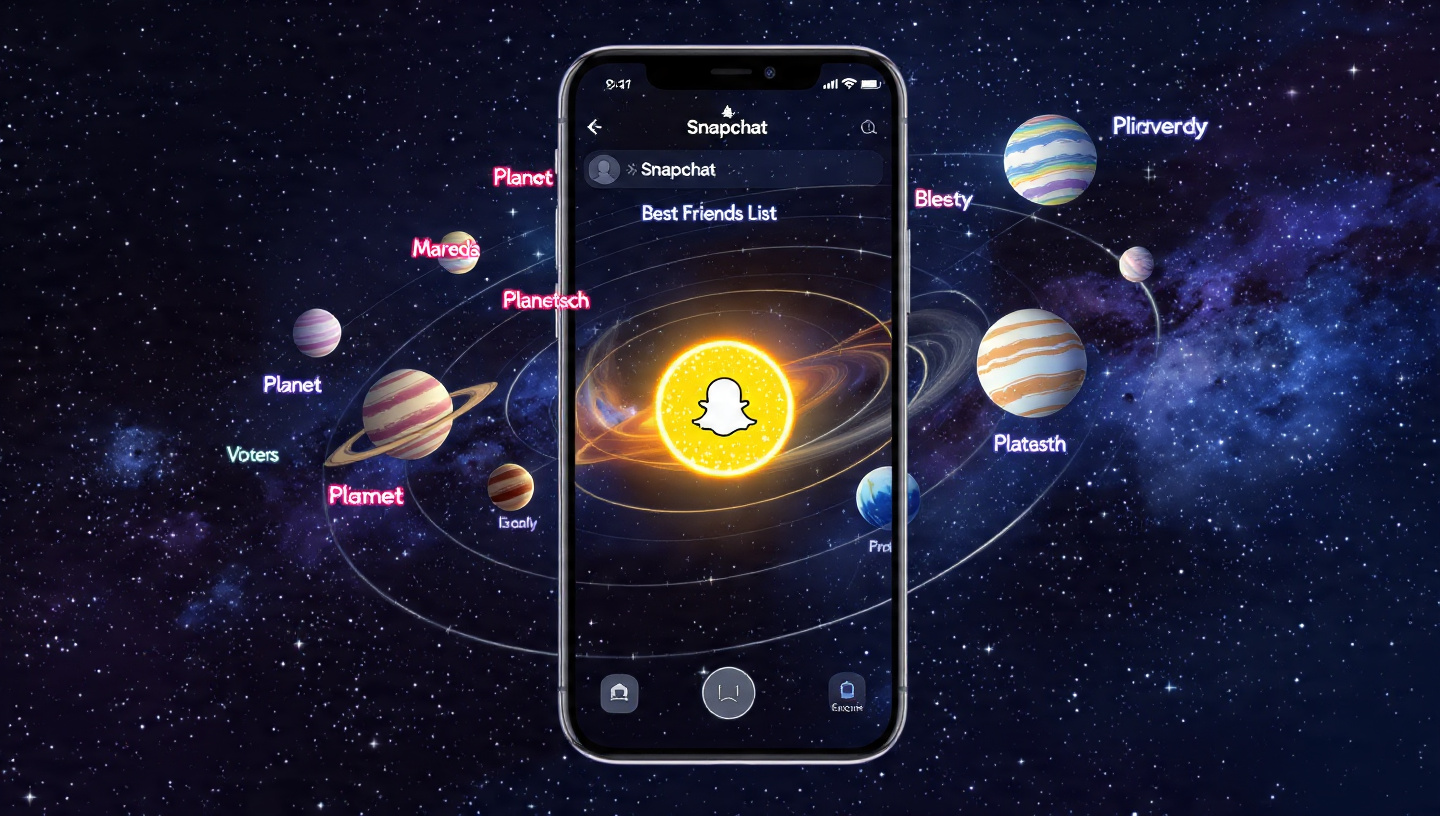
Snapchat has long been a pioneer in redefining how people communicate digitally.
One of its most intriguing features is the way it visualizes social connections, transforming a user’s best friends list into a solar system-like interface.
This feature goes beyond simple ranking or alphabetical order, offering a dynamic, interactive, and visually engaging way to represent relationships.
By turning friends into orbiting “planets,” Snapchat provides users with an intuitive sense of social hierarchy, interaction frequency, and connection strength.
Understanding how this system works reveals insights into user engagement, behavioral analytics, and the psychology behind social media interactions.
The Concept Behind Snapchat’s Solar System
Snapchat’s “solar system” concept assigns each friend a unique position based on interaction patterns.
The closest friends—those you message, snap, or engage with the most—occupy positions closer to your central avatar, representing the “sun” of your social system.
Friends with whom you interact less frequently orbit farther away, resembling distant planets.
This dynamic arrangement allows users to quickly gauge their social landscape at a glance, turning abstract data into an intuitive visual metaphor.
The feature encourages engagement by subtly highlighting which relationships are strongest and which may need more attention.
It combines social psychology with gamification to increase time spent on the app and interaction with other users.
How Interaction Determines Orbit
Snapchat uses algorithms to track various forms of interaction, including snaps, chats, story views, and reactions.
Each type of engagement carries weight, influencing a friend’s orbit within your solar system.
For instance, friends with whom you frequently exchange snaps or send Bitmojis may appear as inner planets or even moons, indicating closeness.
Those you occasionally interact with might appear on the outer edges, reflecting weaker or less active connections.
The continuous updating of this system ensures that the visualization reflects real-time social behavior.
As relationships evolve, so too do the positions of friends within the solar system, keeping the interface dynamic and personalized.
The Psychology of Social Visualization
Visualizing social connections as a solar system taps into fundamental psychological principles.
Humans naturally understand spatial relationships and hierarchical structures, making this interface more intuitive than lists or grids.
By representing friends as planets orbiting around a central self, Snapchat reinforces the concept of social proximity.
Users can instantly identify core relationships, peripheral friends, and potential engagement gaps.
This visual metaphor also introduces subtle social pressure, motivating users to maintain closer interactions with inner-circle friends.
It’s a clever blend of social science and interface design that enhances user experience while promoting app engagement.
Benefits for Users
The solar system interface provides several benefits for Snapchat users.
Firstly, it allows for quick recognition of key relationships without manually reviewing chat history.
Secondly, it gamifies social interaction by rewarding consistent engagement with prominent orbital positions.
Friends appearing closer to the center may signal stronger social bonds, while distant planets suggest relationships that may require attention.
Additionally, the interface supports discovery, encouraging users to reconnect with friends they may have neglected.
By providing a clear, visual representation of interactions, Snapchat helps users manage and prioritize their digital social life effectively.
Implications for Social Media Analytics
Snapchat’s approach also has broader implications for social media analytics.
By translating complex interaction data into visual metaphors, the platform can provide actionable insights into user behavior and engagement patterns.
Brands and marketers can study aggregated trends, such as how frequently certain user segments interact or how engagement shifts over time.
This visualization model may inform future designs for social platforms seeking to merge analytics with intuitive user experiences.
It also highlights the potential of gamified social interfaces in increasing retention and interaction rates across digital platforms.
Future Possibilities
Snapchat’s solar system concept may evolve further with the integration of augmented reality (AR) and AI-driven personalization.
Imagine friends represented as 3D planets in AR space, interactive avatars, or dynamic orbit adjustments based on live engagement metrics.
Such innovations could deepen the sense of presence, connection, and social awareness, making digital interactions even more immersive.
As social media platforms compete for user attention, creative visualizations like Snapchat’s offer a competitive edge.
Conclusion
Snapchat’s transformation of best friends lists into a solar system is more than a gimmick—it’s a sophisticated combination of behavioral psychology, data analytics, and interface design.
By representing social proximity and engagement visually, the app allows users to understand and manage their relationships intuitively.
This feature reinforces interaction, encourages consistent engagement, and provides insights into user behavior that benefit both individuals and the platform.
As digital socialization continues to evolve, Snapchat’s solar system model exemplifies how innovative design can make complex social data accessible, engaging, and meaningful.
