



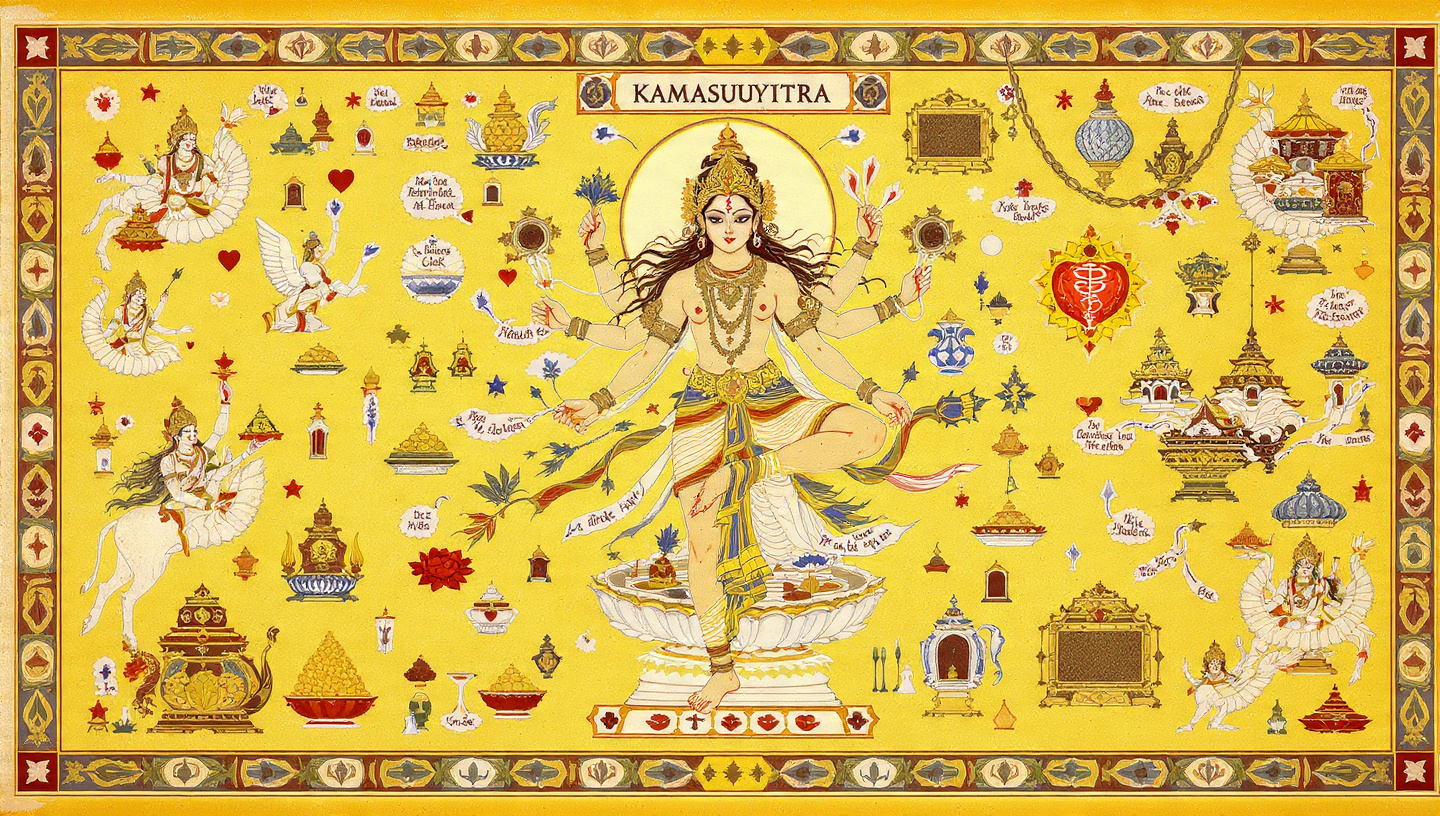
The Kamasutra is one of the most famous ancient texts in the world, often associated with love, relationships, and human sexuality. But do you know who wrote it, its historical context, and the legacy it left behind? In this article, we explore the story of Vatsyayana, the author, and why his work continues to be studied and admired today.
Who Wrote the Kamasutra?
The Kamasutra was written by Vatsyayana, an ancient Indian philosopher and scholar. The exact dates of his life are uncertain, but historians estimate that he lived around 3rd to 4th century CE.
Vatsyayana was a learned scholar of Sanskrit literature and Hindu philosophy. His goal was to provide guidance on love, relationships, and social conduct, not just sexuality. The Kamasutra is considered a manual for understanding human desires and social behavior.
The Purpose of the Kamasutra
While the book is popularly known for its sexual content, the Kamasutra is much more than that. It is a comprehensive guide to life and relationships, including:
-
Courtship and love: Advice on how to attract and maintain a partner
-
Social etiquette: Rules for interactions in society
-
Marriage and family: Guidance on domestic life and responsibilities
-
Personal development: Cultivating charm, manners, and intelligence
Vatsyayana emphasized the balance between desire, morality, and duty, reflecting the Hindu concept of the four goals of life: Dharma (duty), Artha (wealth), Kama (desire), and Moksha (liberation).
Structure of the Kamasutra
The Kamasutra is divided into seven main parts:
-
Introduction: Discusses the purpose of the book and the philosophy of love
-
On Sexual Union: Details various techniques and types of intimacy
-
About Acquisition of a Wife: Advice on finding and courting a partner
-
About a Wife: Guidance on maintaining a loving and harmonious marriage
-
On the Conduct of Women: Understanding female behavior and emotions
-
About Courtesans: Advice on relationships outside traditional marriage
-
Conclusion: Reflections on love, desire, and life balance
Each section combines practical advice with philosophical insights, making it a text that blends art, science, and ethics.
Legacy of Vatsyayana’s Kamasutra
The Kamasutra has left a lasting impact on literature, art, and culture worldwide. Its influence includes:
-
Translations and adaptations: The first English translation by Sir Richard Burton in 1883 brought the text to Western audiences
-
Art and sculpture: Ancient Indian temples like Khajuraho feature erotic art inspired by Kamasutra themes
-
Modern relationship guides: Contemporary books on love and sexuality often draw inspiration from its principles
Despite its fame, the Kamasutra should be read as a cultural and philosophical text, not merely a sexual manual.
Interesting Facts About the Kamasutra
-
Vatsyayana wrote the book anonymously; little is known about his personal life
-
The book was meant for educated urban elites, not the general population
-
It promotes mutual consent, respect, and understanding in relationships
-
The Kamasutra is part of a larger tradition of ancient Indian literature on desire and social conduct
Conclusion
The Kamasutra, written by Vatsyayana, is more than just a guide to physical intimacy. It is a profound exploration of human relationships, ethics, and the pursuit of happiness. Its teachings continue to influence scholars, artists, and lovers worldwide, reflecting the timeless wisdom of ancient India.
For anyone curious about the history of love, relationships, and human desire, the Kamasutra remains a masterpiece worth studying.
