



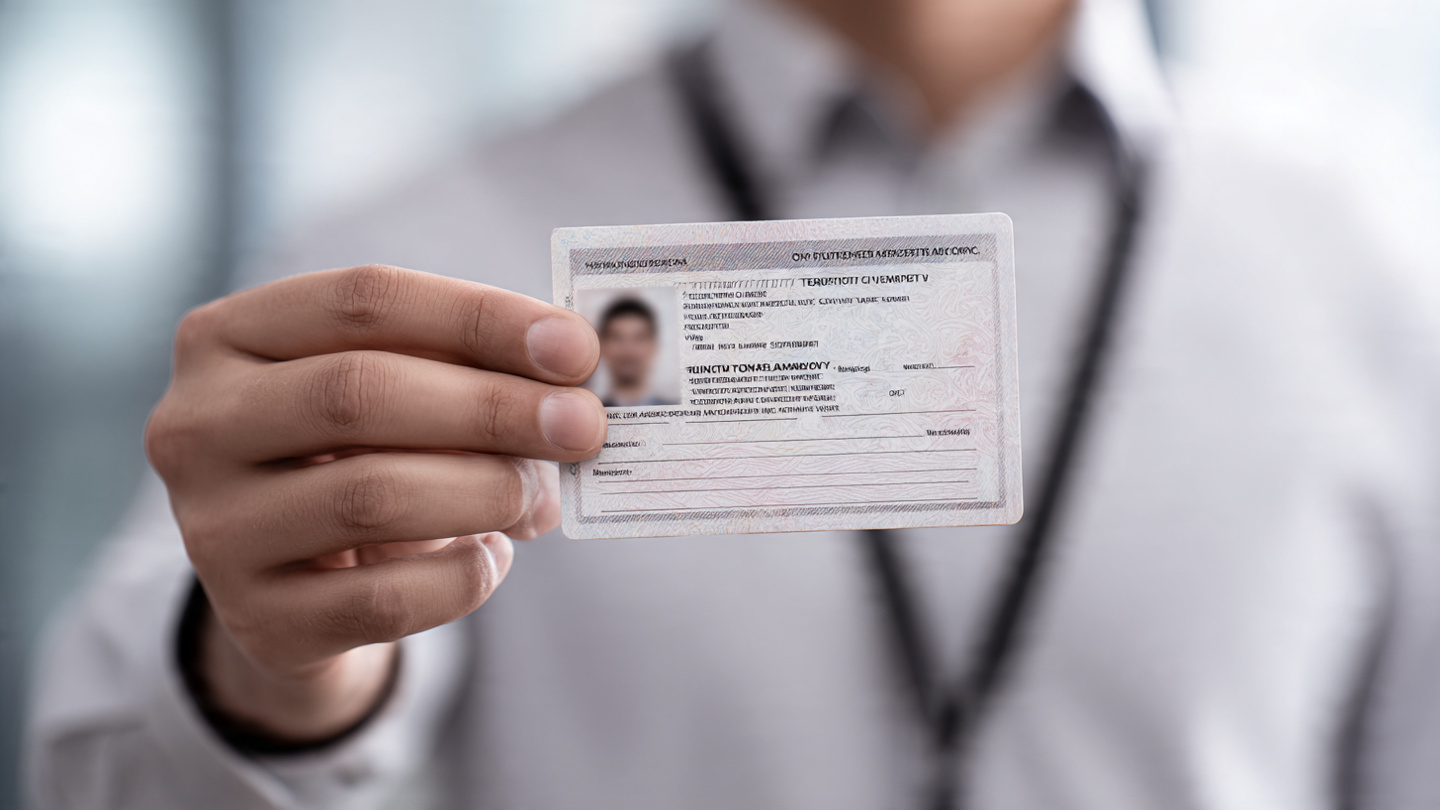
In today’s complex administrative landscape, proving who you are is often required at every turn — whether you’re opening a bank account, enrolling in school, applying for government services, or complying with employment requirements.
A Temporary Identity Certificate serves as an interim document that confirms an individual’s identity when their permanent identification is unavailable or still being processed.
This article explores what this certificate is, why it matters, and how it supports modern identity verification systems.
- What Is a Temporary Identity Certificate?
- Why Temporary Identity Certificates Are Important for Verification
- Real‑World Situations Where Temporary Identity Certificates Matter
- How Temporary Identity Certificates Support Digital Identity Systems
- Limitations and Practical Considerations
- Conclusion: The Certificate’s Strategic Role in Identity Verification
A Temporary Identity Certificate fills the gap between applying for a permanent ID and actually receiving it.
It provides legally accepted proof of identity for a limited time, ensuring that individuals can meet verification requirements without delay.
Unlike permanent identity cards or passports, these certificates are issued with a specific purpose and defined validity, acting as a bridge until traditional identification becomes available.
Understanding the role and value of a temporary identity certificate is essential in a world where identity verification is a prerequisite for accessing essential services and participating in everyday civic life.
What Is a Temporary Identity Certificate?
A Temporary Identity Certificate is a provisional document that confirms an individual’s identity until permanent identification is issued.
It includes key personal information such as the person’s full name, date of birth, residential address, and often a unique reference tied to an official identity system.
Because it is issued by a government or authorized authority, the certificate carries official status despite being temporary.
Many people encounter the need for such a certificate when they have lost their permanent IDs or when application backlogs delay the issuance of new ones.
This certificate can be provided in printed form or digitally, depending on the issuing agency’s capabilities.
It offers official confirmation of identity for daily activities, such as opening accounts, accessing services, or meeting compliance requirements.
Temporary Identity Certificates are particularly useful in systems where identification plays a central role in accountability and access.
They are designed primarily to ensure continuity of access rather than replace permanent identification indefinitely.
Why Temporary Identity Certificates Are Important for Verification
Identity verification is crucial for both individuals and institutions.
Governments, financial organizations, employers, and educational institutions need to be confident that someone is who they claim to be before granting access to services, privileges, or accounts.
Without valid identity documents, people can face significant barriers to essential services.
In many administrative processes, the absence of immediate proof can halt progress or exclude individuals from participation.
A Temporary Identity Certificate ensures that verification requirements are met while permanent IDs remain in process.
This is especially significant in bureaucratic systems where delays in ID issuance are common due to high demand, administrative backlogs, or procedural complexities.
Institutions that rely on verified identity — such as banks or government offices — can accept temporary certificates as legitimate proof, enabling people to move forward with important transactions or applications.
Rather than being sidelined by missing documents, individuals can continue with their personal, professional, or legal obligations.
Real‑World Situations Where Temporary Identity Certificates Matter

Temporary Identity Certificates are most often needed in several real‑life scenarios.
For example, if a person’s official ID — like a passport, national ID card, or driver’s license — is misplaced, stolen, or destroyed, a temporary certificate provides an immediate, legally recognized alternative.
These certificates are also critical when someone is applying for their first permanent ID.
Because it can take weeks or months for an official document to be processed and delivered, institutions may require interim proof in the meantime.
Temporary certificates fill this role, preventing disruptions to activities like school enrollment, employment onboarding, or banking.
In emergency situations — such as natural disasters, travel disruptions, or displacement — a Temporary Identity Certificate may be the only document a person has to show authorities or service providers.
In these cases, having valid interim identification can mean the difference between accessing critical services or being left without support.
How Temporary Identity Certificates Support Digital Identity Systems
In the digital age, identity verification requirements extend beyond physical spaces into online platforms and services.
Digital systems often need instant verification before allowing access to financial platforms, government portals, or secure networks.
However, the processes that issue permanent ID documents do not always move at the same speed.
Temporary Identity Certificates act as a compatibility layer between individuals and systems that depend on validated identity data.
They help bridge the gap between the immediacy expected by digital platforms and the reality of traditional identity issuance.
In some jurisdictions, digital temporary certificates with secure verification links or QR codes are becoming more common, enabling easy, authenticated online use.
This evolving role underscores the certificate’s importance in facilitating seamless verification without compromising security or oversight.
Limitations and Practical Considerations
While valuable, Temporary Identity Certificates have limitations.
They are valid only for a defined period and are not meant to replace permanent identity documents indefinitely.
Some institutions may still require the permanent ID once it becomes available.
Understanding the certificate’s expiration and scope of acceptance is essential.
It may not be valid for certain legal activities like international travel, voting, or activities that specifically require long‑term identification.
Users should always check with the issuing authority or the institution requesting verification before relying on the temporary document.
Conclusion: The Certificate’s Strategic Role in Identity Verification
Temporary Identity Certificates play a strategic role in identity verification by ensuring continuity and access to services when permanent documentation is delayed or unavailable.
They serve as interim proof of identity that allows people to move forward with administrative, legal, and personal obligations without interruption.
As identity requirements continue to expand in both physical and digital domains, the importance of temporary verification solutions remains significant.
By recognizing their role and limitations, individuals and institutions alike can navigate identity verification processes effectively and inclusively.
