



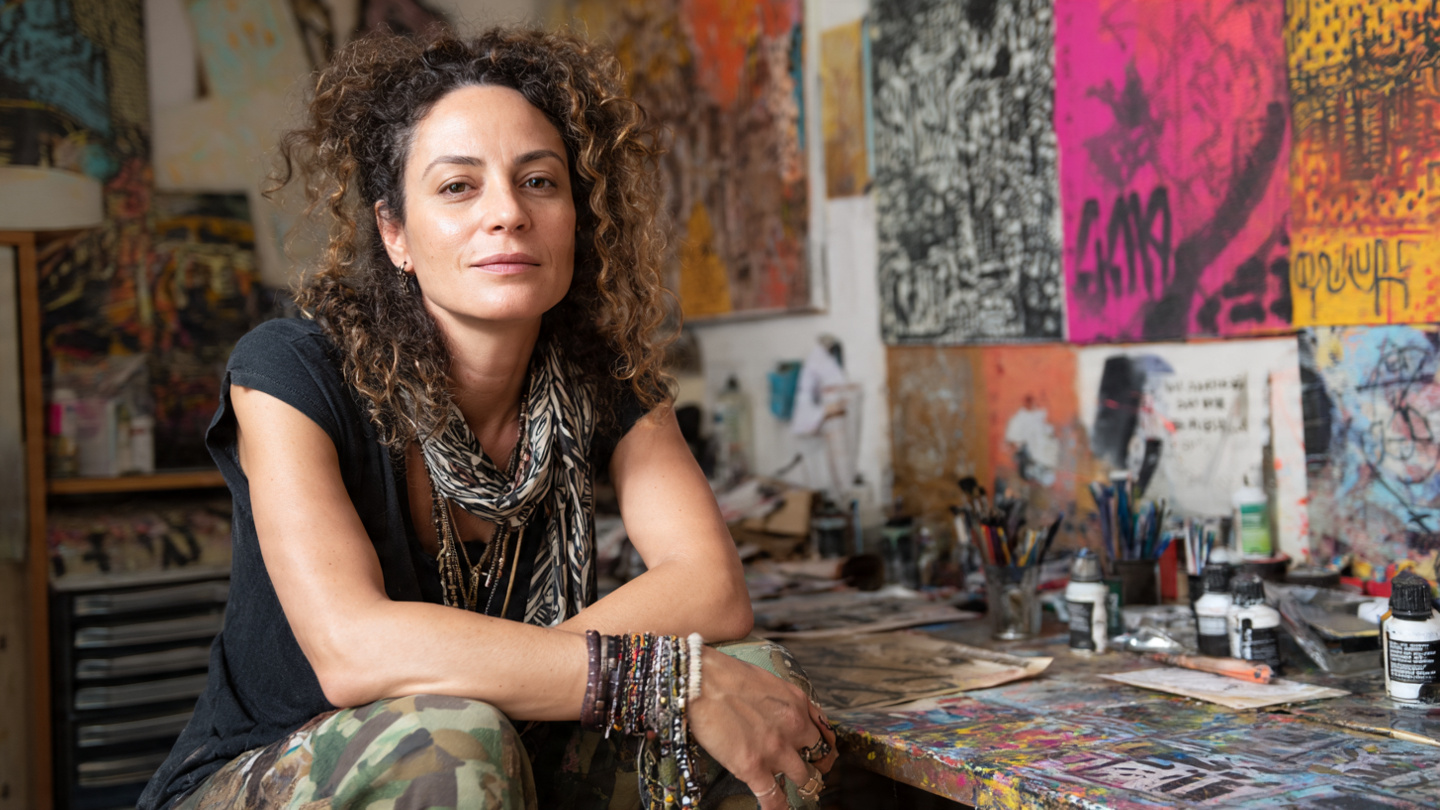
Shani Levni is emerging as a distinctive voice in the global contemporary art scene, known for her visually layered works, cultural depth, and commitment to social impact.
As an Israeli artist, educator, and cultural advocate, Levni brings together themes of memory, identity, belonging, and social healing in her art and community work.
Her practice goes beyond aesthetics, inviting viewers into conversations about history, cultural memory, and collective experience.
Through exhibitions, workshops, and public speaking, Levni has positioned herself as a multidisciplinary creative whose work resonates across cultural and geographic boundaries.
Early Life and Cultural Roots
Born and raised in Tel Aviv, Israel, Levni grew up in a multicultural environment that deeply influenced her creative identity.
Her exposure to Jewish, Mediterranean, and European cultural currents encouraged her to view art as both personal expression and collective narrative.
From an early age, she was drawn to the interplay between tradition and contemporary life, finding in everyday rituals and storytelling the seeds of her future artistic vision.
This background shaped her belief that creativity is fundamentally connected to personal history and community.
Education and Artistic Formation
Shani Levni’s formal training began at the Bezalel Academy of Arts and Design in Jerusalem, where she studied abstract painting and mixed media.
Her academic journey continued with an MFA in Art Theory in Berlin, strengthening the conceptual underpinnings of her practice.
Her graduate work explored how memory, trauma, and cultural narrative could be translated into visual and material form.
This layered approach—where texture carries emotional and historical meaning—became a cornerstone of her visual language.
Signature Style and Visual Language
Levni’s artistic style is defined by mixed media, installation, and symbolic abstraction.
Her works often combine paint, fabric, paper, gold leaf, and handwritten elements to create surfaces rich with texture and meaning.
Recurring motifs—such as olive branches (symbolizing resilience and heritage), pomegranates (memory and fertility), and scrolls (unspoken voices)—reflect cultural history and collective memory.
Her color palette frequently features deep Mediterranean blues, earthy reds, and luminous golds, each chosen for symbolic resonance rather than decorative effect.
This visual language invites viewers to contemplate identity, spirituality, and the emotional weight of history.
Levni’s compositions are thoughtful, often requiring active engagement rather than passive viewing.
Notable Exhibitions and Artistic Impact
Shani Levni has participated in acclaimed exhibitions that showcase her ability to blend technical skill with emotional narrative.
Her show “A Parallel Universe” at Sputnik Gallery incorporated mystical symbolism and immersive visual language that encouraged personal reflection.
In “Whispers of the Olive Tree” at the Tel Aviv Museum of Art, her youthful command of layered symbolism and historical texture drew particular praise.
Other key exhibitions, such as “Between Earth and Sky” at Rosenfeld Gallery, explored spiritual and physical belonging with richly textured surfaces and thoughtful compositions.
Community Engagement and The Root Collective
Beyond her studio practice, Levni is a passionate advocate for using art as a means of social empowerment and healing.
She founded The Root Collective, a nonprofit initiative that provides art workshops for refugees, immigrants, and marginalized youth across Europe and the Middle East.
These workshops integrate storytelling, visual practice, and emotional reflection, offering participants a space to translate personal experience into visual form.
The initiative has hosted numerous workshops and produced public murals celebrating resilience and cultural diversity.
Her educational philosophy emphasizes empathy, narrative empowerment, and creative confidence, underscoring the belief that art can foster both individual healing and community cohesion.
Public Talks and Thought Leadership
Levni’s influence extends into public discourse through speaking engagements and cultural panels.
She has presented her ideas at international venues such as TEDx Jaffa and UNESCO panels, advocating for the ethical and communal power of art.
Her widely quoted phrase “Art is not decoration—it is conversation” captures her belief that art should provoke dialogue, challenge assumptions, and connect people across difference.
Contemporary Relevance and Legacy
In a world marked by displacement, cultural fragmentation, and historical tension, Shani Levni’s art offers a visual language of empathy and connection.
Her work bridges personal narrative with collective memory, encouraging viewers to reflect on identity, history, and shared experience.
Through both her artistic practice and community engagement, Levni continues to influence contemporary art by redefining how creative expression can engage with social and cultural issues.
Her voice remains significant not only for its aesthetic depth but also for its moral and societal impact.
Conclusion
Shani Levni belongs to a generation of artists who transform personal and historical memory into visual narratives that resonate globally.
Her commitment to cultural storytelling, combined with her thoughtful use of symbolism and material, marks her as a compelling figure in contemporary art.
By blending creative expression with community empowerment and public discourse, Levni embodies art’s potential not just to reflect the world, but to change it.
