



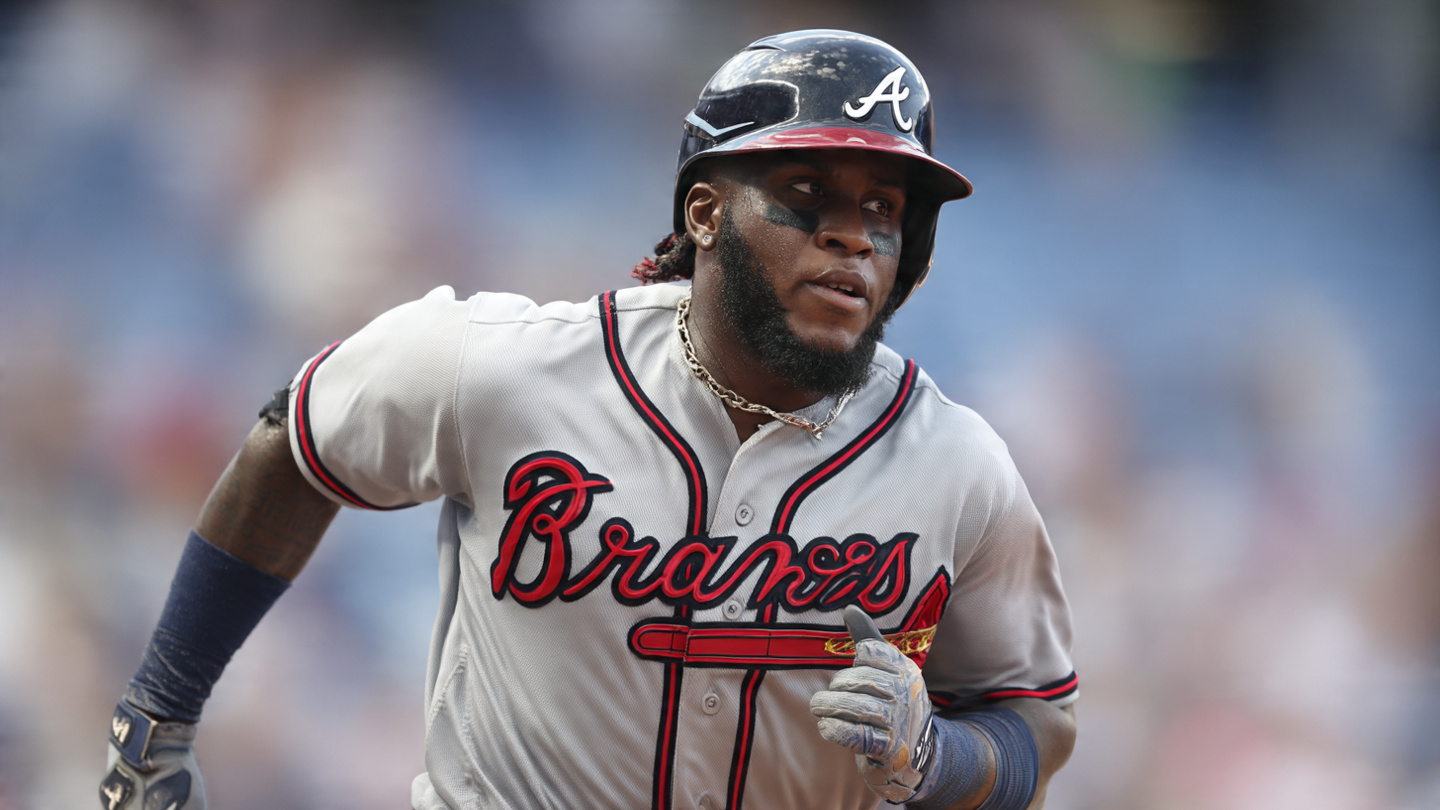
The Emergence of Waiver Speculation Around Marcell Ozuna
In recent MLB discussions, Marcell Ozuna of the Atlanta Braves has been labeled a potential waiver candidate, sparking widespread debate among fans and analysts.
This speculation did not arise overnight but developed as part of a broader conversation about roster flexibility, performance trends, and long-term team strategy.
- The Emergence of Waiver Speculation Around Marcell Ozuna
- What Does It Mean to Be a Waiver Candidate?
- Key Factors Behind the Speculation
- The Business Side: Contracts and Financial Strategy
- How This Impacts the Braves Moving Forward
- What It Means for Marcell Ozuna’s Career
- Final Thoughts: Strategy Over Sentiment
The Braves, known for their aggressive and forward-thinking front office decisions, have increasingly prioritized adaptability over reliance on veteran players.
As a result, Ozuna’s role has come under scrutiny, particularly during a season where the team’s competitive outlook shifted and forced management to reassess its roster construction.
For many observers, the idea of placing a well-known slugger on waivers may seem surprising.
However, in modern baseball, such moves are often less about a player’s past achievements and more about future value, financial flexibility, and team direction.
What Does It Mean to Be a Waiver Candidate?
Being labeled a waiver candidate in MLB does not automatically mean a player will be released or traded.
Instead, it indicates that a team is considering placing the player on waivers, giving other franchises the opportunity to claim him and assume his contract.
If no team claims the player, he remains with his current team, often with a redefined role.
This mechanism allows teams like the Braves to test the market while maintaining control over the situation.
For Ozuna, this designation reflects a strategic crossroads rather than a definitive exit.
It suggests the Braves are weighing their options carefully, balancing his offensive capabilities with the need to optimize roster efficiency and create opportunities for younger players.
Key Factors Behind the Speculation
Several factors have contributed to the growing speculation surrounding Ozuna’s status.
One of the most significant is his decline in offensive production compared to previous standout seasons.
After posting elite numbers in earlier years, including back-to-back power-heavy campaigns, Ozuna experienced a noticeable dip in performance during the 2025 season.
He finished with a .232 batting average and 21 home runs, a step down from his previous output.
In addition to performance, health concerns have also played a role.
A lingering hip issue affected his consistency and raised questions about his long-term durability, particularly as he entered his mid-30s.
Another major factor is his limited defensive versatility.
Primarily serving as a designated hitter, Ozuna does not offer the positional flexibility that many modern teams prioritize, making it more difficult to justify his roster spot in certain situations.
Finally, the Braves’ position in the standings contributed to the narrative.
With the team falling out of playoff contention, management began exploring ways to reset and experiment with different lineup combinations, further fueling waiver speculation.
The Business Side: Contracts and Financial Strategy
Financial considerations are always a key element in MLB roster decisions, and Ozuna’s situation is no exception.
As a veteran player in the final year of his contract, he represented both value and cost for the Braves.
By potentially placing him on waivers, the organization could create financial breathing room while giving other teams the chance to take on his remaining salary.
This type of move is particularly common for teams looking to reallocate resources or prepare for future roster changes.
At the same time, Ozuna’s proven power-hitting ability ensures that he still holds appeal across the league.
Even during a down year, his ability to hit home runs and get on base makes him an attractive option for contenders seeking offensive depth.
How This Impacts the Braves Moving Forward
For the Braves, the waiver speculation surrounding Ozuna highlights a broader shift in team philosophy.
Rather than relying heavily on established veterans, the organization appears focused on building a more dynamic and flexible lineup.
This approach often involves rotating players based on matchups and giving opportunities to emerging talent.
It also allows the team to adapt more quickly to injuries, slumps, and changing competitive conditions throughout the season.
If Ozuna were to be placed on waivers and claimed, it could open the door for younger players to step into larger roles.
If he remains, his playing time may continue to fluctuate as the team experiments with different lineup combinations.
What It Means for Marcell Ozuna’s Career
For Ozuna, being labeled a waiver candidate represents a pivotal moment in his career.
While it may signal a reduced role with the Braves, it also presents an opportunity for a fresh start with another organization.
Despite recent challenges, his track record as a three-time All-Star and power hitter remains impressive.
Teams in need of a designated hitter or offensive boost could view him as a valuable addition, particularly for a playoff push.
In fact, the speculation ultimately aligned with his transition into free agency and a new chapter, as he later signed with the Pittsburgh Pirates for the 2026 season.
Final Thoughts: Strategy Over Sentiment
The “waiver candidate” label attached to Marcell Ozuna reflects the evolving nature of Major League Baseball.
Teams are increasingly driven by analytics, flexibility, and long-term planning rather than sentiment or past performance.
For the Braves, the speculation was less about moving on from a player and more about positioning the team for sustained success.
For Ozuna, it marked a transition point that underscored both the challenges and opportunities that come with a long professional career.
As MLB continues to evolve, situations like this serve as a reminder that even established stars must adapt to changing team needs and league dynamics.
