



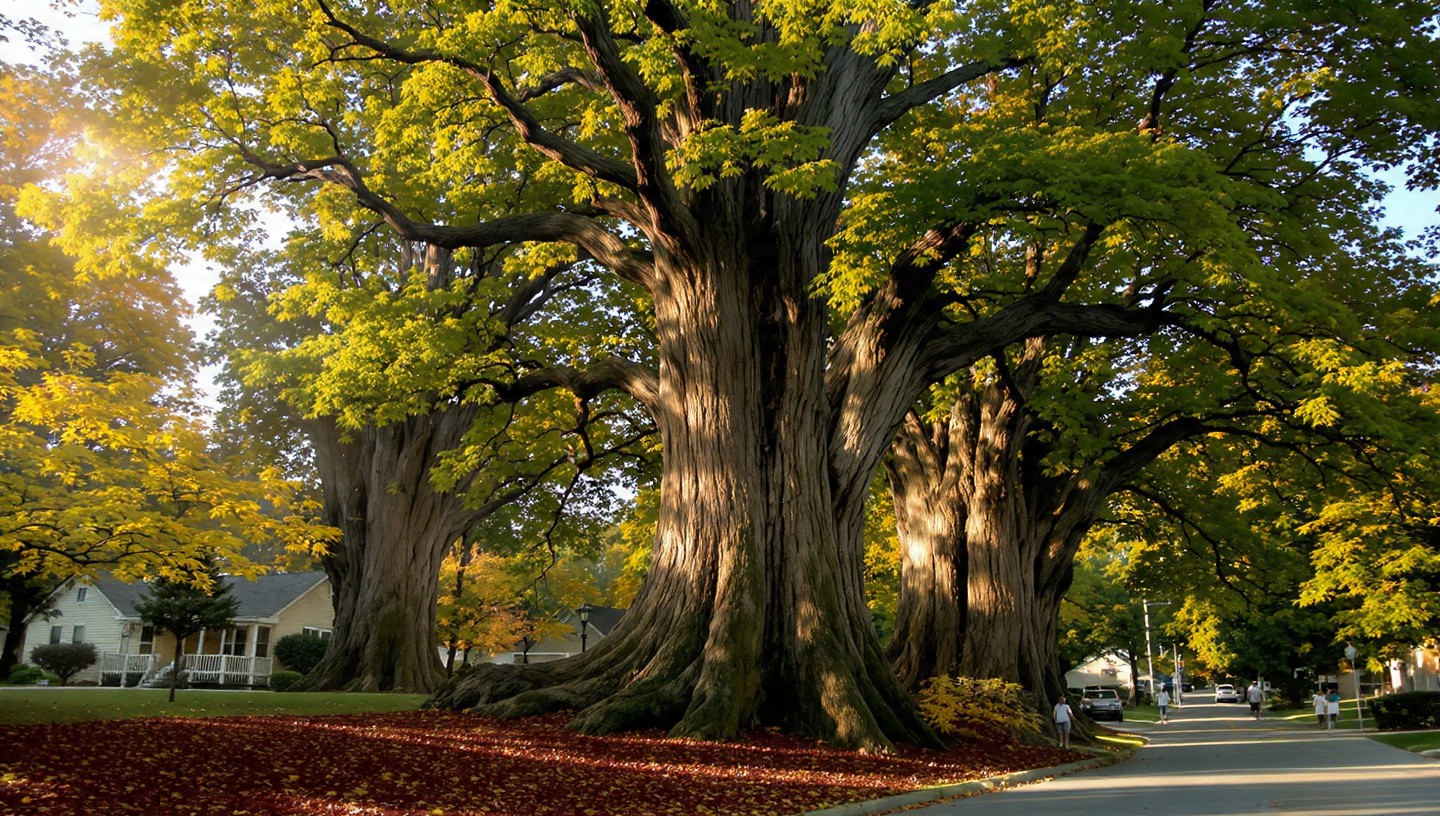
Ohio Champion Trees in Lewis Center represent some of the largest and most impressive examples of tree species found in the state.
These natural giants are not rare myths or hidden legends, but scientifically measured trees recognized for their exceptional size, based on trunk circumference, height, and canopy spread.
In and around Lewis Center, Ohio, these trees quietly exist in parks, residential neighborhoods, and preserved natural corridors, forming a living link between modern suburban life and Ohio’s ancient forests.
What Are Ohio Champion Trees?
Ohio Champion Trees are officially recognized as the largest known individuals of their species within the state.
They are not chosen based on age alone, but through a standardized measurement system that ensures fair comparison between species.
Each tree is evaluated using three main criteria: trunk circumference, total height, and average crown spread.
These measurements are combined into a scoring system that determines whether a tree qualifies as a state champion or a notable candidate.
Why Lewis Center Has So Many Large Trees
Lewis Center’s environment plays a major role in supporting champion-sized trees.
The region sits on fertile glacial soils that allow deep root growth and long-term stability, which are essential for massive tree development.
Historically, the area was covered in hardwood forests and open agricultural land, where trees had enough space and sunlight to grow wide trunks and expansive canopies.
Even as suburban development expanded, many mature trees were preserved intentionally in parks, school grounds, and residential areas, allowing them to continue growing for centuries.
Notable Tree Species Found Near Lewis Center
Several species commonly reach champion size in this region due to favorable soil, moisture, and climate conditions.
One of the most significant is the white oak, known for its strength, longevity, and massive trunk development over hundreds of years.
Another prominent species is the eastern cottonwood, often found near waterways and capable of reaching towering heights and enormous trunk girth.
The American sycamore is also common in champion listings, especially along creeks and floodplains where moisture supports rapid growth.
Other frequently observed species include silver maple, tulip poplar, and bur oak, all of which can achieve remarkable size under the right conditions.
Where to Find Champion Trees in Lewis Center
Champion or champion-scale trees in Lewis Center are often not marked with obvious signs, making them easy to overlook.
Many are located in suburban neighborhoods where development was designed around existing mature trees rather than removing them.
Others can be found in local parks, greenways, and natural corridors that follow streams and wetlands throughout Delaware County.
These settings create quiet pockets of nature where ancient trees continue to thrive alongside modern infrastructure.
Why These Trees Matter Ecologically
Champion trees are more than just visually impressive landmarks—they play a critical ecological role.
Large, mature trees store significantly more carbon than younger trees, helping reduce atmospheric carbon levels over time.
Their wide canopies also provide shade, lowering local temperatures and improving comfort in surrounding neighborhoods.
Additionally, their root systems stabilize soil, reduce erosion, and improve water absorption during heavy rainfall events.
Wildlife also depends heavily on these trees, as they provide nesting sites, food sources, and shelter for countless species.
A Living Connection to Ohio’s Natural History
Many of these trees are living survivors of Ohio’s original forests, which once covered the region before large-scale agriculture and urban development.
Some may have begun growing more than a century ago, witnessing the transformation from rural land to modern suburb.
Because of this, they function as living historical records, showing how ecosystems evolve over time without being destroyed completely.
In a rapidly developing area like Lewis Center, their presence is especially meaningful as a reminder of what once existed.
Conservation and Preservation Efforts
The survival of champion trees in Lewis Center is not accidental.
Many have been preserved through conscious planning decisions, including tree protection ordinances and environmentally sensitive development practices.
Homeowners, local authorities, and conservation groups often work together to protect these trees from damage caused by construction or land clearing.
In some cases, entire developments are redesigned to preserve a single large tree as a centerpiece of the landscape.
Conclusion
Ohio Champion Trees in Lewis Center are hidden natural treasures that reflect both ecological resilience and thoughtful preservation.
They are not just large trees—they are living monuments that connect modern life with Ohio’s deep natural history.
From white oaks standing for centuries to towering sycamores along quiet streams, these trees continue to shape the landscape in ways that are both subtle and powerful.
Exploring them offers a rare opportunity to see how nature and suburban life can coexist, creating a landscape where history is still growing, one ring at a time.
