



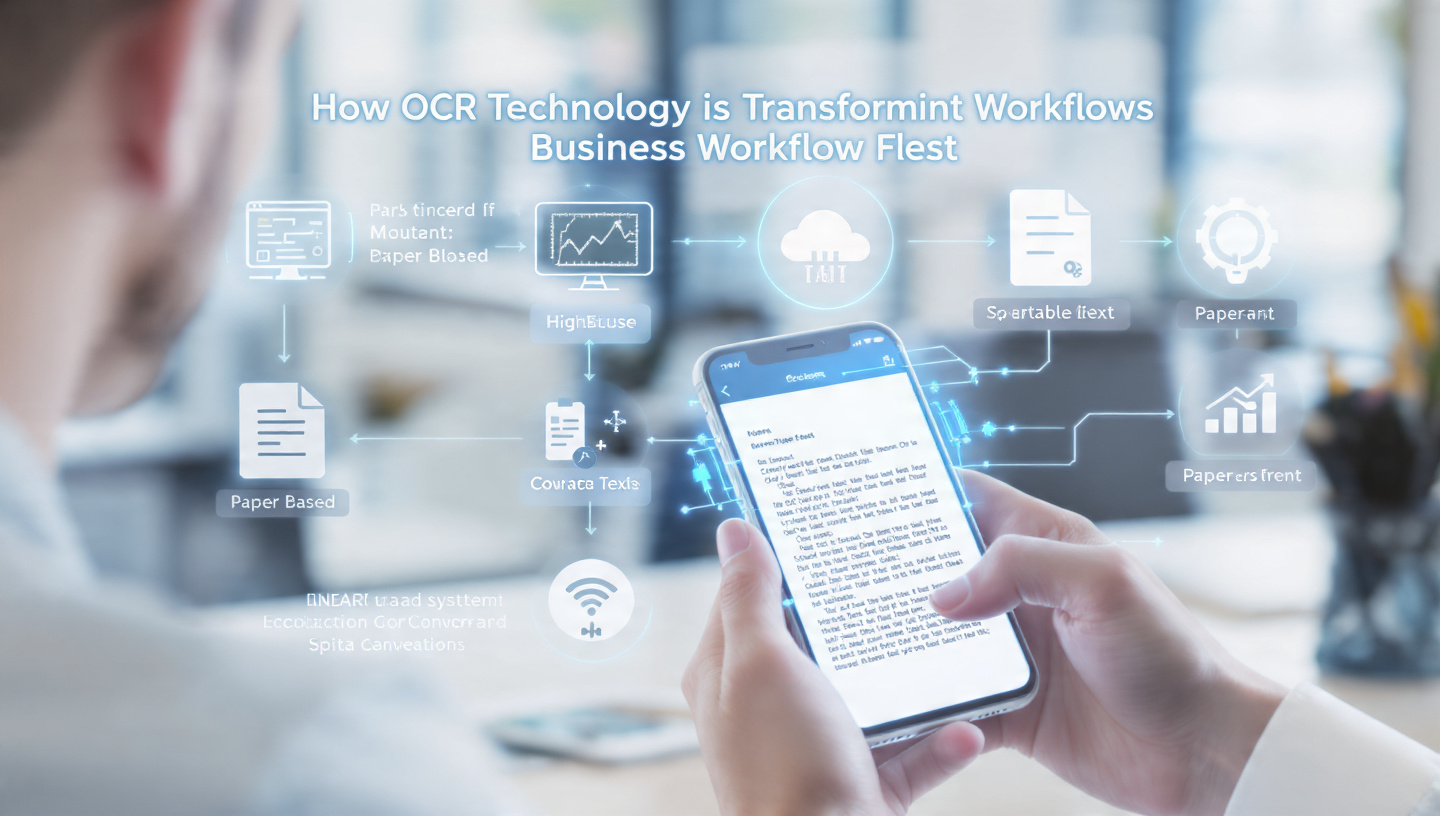
In the modern digital era, businesses are constantly searching for ways to improve efficiency, reduce costs, and eliminate manual processes. One of the most impactful innovations driving this transformation is OCR (Optical Character Recognition) technology. By converting printed or handwritten text into machine-readable data, OCR is helping organizations move toward faster, smarter, and completely paperless operations.
- What Is OCR Technology?
- How OCR Is Transforming Business Workflows
- 1. Eliminating Manual Data Entry
- 2. Accelerating Document Processing
- 3. Improving Accuracy and Compliance
- 4. Enabling Paperless Operations
- 5. Enhancing Customer Experience
- Key Benefits of OCR Technology
- Real-World Use Cases
- Challenges of OCR Technology
- The Future of OCR in Business
- Conclusion
What Is OCR Technology?
Optical Character Recognition (OCR) is a technology that scans documents—such as PDFs, images, or paper files—and converts the text within them into editable and searchable digital content.
Whether it’s invoices, contracts, receipts, or forms, OCR allows businesses to extract and process information automatically without the need for manual data entry.
How OCR Is Transforming Business Workflows
1. Eliminating Manual Data Entry
Traditional data entry is time-consuming and prone to errors. OCR automates this process by instantly extracting data from documents, significantly reducing human effort and mistakes.
2. Accelerating Document Processing
With OCR, documents can be processed in seconds rather than hours. This is especially valuable in industries like finance, healthcare, and logistics where speed is critical.
3. Improving Accuracy and Compliance
OCR systems reduce human error and ensure consistent data capture. This helps businesses maintain compliance with regulations and improve overall data reliability.
4. Enabling Paperless Operations
By digitizing documents, OCR reduces the need for physical storage. Businesses can store, search, and retrieve files digitally, leading to more sustainable and eco-friendly operations.
5. Enhancing Customer Experience
Faster processing times mean quicker responses to customers. Whether it’s onboarding, billing, or support, OCR helps deliver a smoother and more efficient customer experience.
Key Benefits of OCR Technology
✔ Cost Reduction
Automating repetitive tasks lowers labor costs and reduces the need for physical storage and paper.
✔ Increased Productivity
Employees can focus on higher-value tasks instead of manual data entry.
✔ Better Data Management
Digitized data is easier to organize, analyze, and integrate with other business systems.
✔ Scalability
OCR solutions can handle large volumes of documents, making them ideal for growing businesses.
✔ Improved Security
Digital records can be encrypted and backed up, reducing the risk of data loss or unauthorized access.
Real-World Use Cases
Finance and Accounting
- Automated invoice processing
- Expense tracking
- Financial data extraction
Healthcare
- Digitizing patient records
- Processing insurance claims
- Managing prescriptions
Legal Industry
- Contract analysis
- Document archiving
- Case file management
Retail and E-commerce
- Receipt scanning
- Inventory documentation
- Order processing
Challenges of OCR Technology
While OCR offers many advantages, it also comes with some challenges:
- Accuracy with Poor-Quality Documents: Low-resolution scans or handwritten text can affect performance.
- Initial Setup Costs: Implementing OCR systems may require upfront investment.
- Integration Complexity: Aligning OCR with existing systems can take time and effort.
However, advancements in AI and machine learning are continuously improving OCR capabilities.
The Future of OCR in Business
The future of OCR is closely tied to artificial intelligence and automation. Modern OCR tools are evolving into intelligent document processing (IDP) systems that not only extract data but also understand context and make decisions.
As businesses continue to embrace digital transformation, OCR will play a central role in streamlining workflows and enabling smarter operations.
Conclusion
OCR technology is no longer just a convenience—it’s a necessity for businesses aiming to stay competitive. By automating data extraction, improving accuracy, and enabling paperless environments, OCR is revolutionizing how organizations manage their workflows.
Adopting OCR can lead to faster processes, reduced costs, and a more agile business model—making it a powerful tool in today’s digital-first world.
